Guide
Do memory supplements work? What the NIH research actually shows
Short answer: no supplement has been shown to prevent Alzheimer's disease or other dementia. The NIH's National Center for Complementary and Integrative Health (NCCIH) says a few natural products have shown "some modest effects" in trials, but direct evidence that dietary supplements can prevent dementia is lacking. Some single ingredients, such as bacopa, have small studies on attention. None of that replaces a visit to your doctor if your memory is changing.
On this page
What the NIH says, ingredient by ingredient
NCCIH has a short summary of the research on supplements for memory and thinking. Here is what it says about the most common ingredients.
| Ingredient | What NCCIH says |
|---|---|
| Ginkgo biloba | No conclusive evidence it can prevent or slow dementia or cognitive decline |
| Omega-3 fatty acids | Most consistent positive findings, often measured as fish in the diet; supplements have not been shown to help treat Alzheimer's |
| Vitamin E | Few studies, mostly negative; one study suggests it may slow decline in daily function in people who already have Alzheimer's |
| Curcumin (from turmeric) | Evidence too limited and inconsistent for any conclusion |
| Vitamins B6, B12 and folic acid | Short-term use has not improved thinking in older adults; longer studies point to a possible role in slowing decline |
Ginkgo biloba
Ginkgo is one of the oldest "memory herbs", and it has been tested in large trials. In the NIH-funded Ginkgo Evaluation of Memory (GEM) study, 3,069 adults aged 75 or older took 120 mg of ginkgo extract twice a day or a placebo for a median of about six years. Ginkgo did not lower the rate of dementia or Alzheimer's disease, and it did not slow the move to dementia in people who started with mild memory problems.
NCCIH also says it is unclear whether ginkgo helps thinking in healthy people, and that ginkgo may raise the risk of bleeding in people taking blood thinners such as warfarin. Several memory products contain it, including Java Brain and MindQuell.
Omega-3 fatty acids
Of all the diet factors studied, omega-3s have the most consistent positive findings for slowing cognitive decline. But much of that comes from people who eat more fish, not from pills. NCCIH notes that a 2022 review suggests omega-3s may protect healthy people against cognitive decline, but showed no effect on thinking for people already diagnosed with Alzheimer's.
B vitamins
Short-term B6, B12 and folic acid supplements have not been shown to improve thinking in older adults. Longer studies suggest they may play a role in slowing decline. NCCIH adds an important warning: too much vitamin B6 can cause serious side effects. Check the labels of everything you take, because B vitamins show up in many products, including Neuro-Thrive and MemoryFuel.
Vitamin E and curcumin
Most vitamin E studies for Alzheimer's have been negative. The curcumin research is too limited and mixed to say anything either way.
What about bacopa, lion's mane and other "brain herbs"?
Many memory supplements sold online use herbs and mushrooms that NCCIH's summary does not cover. A few have small human studies:
- Bacopa monnieri. A 2014 review of nine trials with 518 people found a small improvement, mainly in speed of attention, after at least 12 weeks. The authors asked for larger trials.
- Lion's mane mushroom. One small Japanese study of 30 adults aged 50 to 80 with mild cognitive impairment saw test scores rise during 16 weeks of use, then fall again after people stopped.
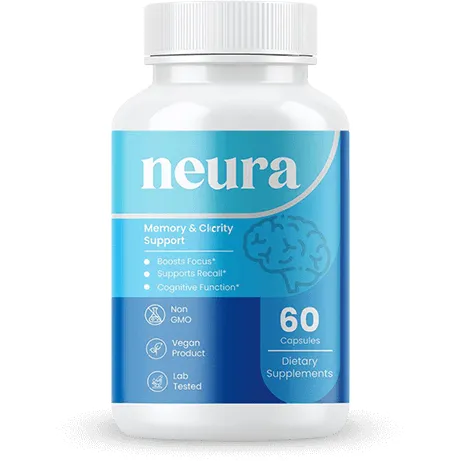
These are early, small results. They are not proof that any branded product works. You can see how specific products line up in our reviews of Neura, CogniSurge, Mindoxa and NeuroPrime.
How to read a memory supplement sales page
Most memory supplements sold online come with a long sales page. A few checks can save you money:
- Look for the amount of each ingredient. Studies use specific doses. If the page lists ingredients but no amounts, or hides them in a "proprietary blend", you cannot compare the product with the research.
- Check that the details add up. Count the ingredients, and compare the prices in the text with the prices at checkout. We have found pages where these do not match.
- Read the references. Some pages cite studies on topics that have nothing to do with the ingredients.
- Know the refund window. Refunds on the products we reviewed range from 60 days to a full year. Write your order date down.
- Be wary of big promises. The sales pages we checked carry the notice that the product is "not intended to diagnose, treat, cure or prevent any disease". A page that promises to cure or reverse a disease contradicts that. We do not review those products.
See a doctor first: memory loss can have treatable causes
NCCIH is clear: do not use supplements as a reason to put off seeing a health care provider about memory loss. It lists treatable conditions that can affect memory:
- Depression
- Bad reactions to medicines
- Thyroid problems
- Liver or kidney problems
Your doctor can check for these with an exam and simple blood tests. Also tell your doctor about every supplement you take. Some herbs, like ginkgo, can interact with prescription drugs.
The bottom line
No supplement has been proven to prevent dementia, and ginkgo, the most tested herb, failed in a large trial. A few ingredients, like bacopa and lion's mane, have small, early studies. If you still want to try a memory supplement, choose one that shows its doses, has a clear refund policy, and that your doctor has checked against your other medicines.
FAQ
Do memory supplements really work?
There is no direct evidence that any supplement prevents Alzheimer's disease or dementia, according to NCCIH. A few ingredients have small studies with modest effects on attention or test scores.
Does ginkgo biloba improve memory?
The large GEM trial found ginkgo did not lower the risk of dementia in adults 75 and older. NCCIH says it is uncertain whether ginkgo helps thinking in healthy people.
Are omega-3 supplements good for memory?
Eating more fish has been linked to slower cognitive decline. Omega-3 supplements have not been shown to help treat Alzheimer's disease.
When should I see a doctor about memory loss?
As soon as you notice new or worsening problems. Depression, medicine side effects, and thyroid, liver or kidney problems can affect memory and can be treated.
Sources
Research and official pages used in this guide, last checked Oct 27, 2026. Product details come from the seller's own website; health claims are checked against studies and health agencies.
- NCCIH (NIH): 7 things to know about dietary supplements for cognitive function, dementia and Alzheimer's disease (read Oct 27, 2026)
- NCCIH (NIH): Ginkgo, usefulness and safety
- DeKosky ST et al. Ginkgo biloba for prevention of dementia: a randomized controlled trial (GEM study). JAMA, 2008
- NCCIH (NIH): Omega-3 supplements, what you need to know
- Kongkeaw C. et al. Meta-analysis of randomized controlled trials on cognitive effects of Bacopa monnieri extract. J Ethnopharmacol, 2014
- Mori K. et al. Improving effects of the mushroom Yamabushitake (Hericium erinaceus) on mild cognitive impairment. Phytother Res, 2009
Health note: this page is for information only and is not medical advice. Statements about dietary supplements have not been evaluated by the Food and Drug Administration, and supplements are not intended to diagnose, treat, cure or prevent any disease. Talk to your doctor or pharmacist before starting a supplement, especially if you take medicines, are pregnant, or have a health condition.